05 February 2013

Your Full Instagram Feed Hits the Web


By Chris Taylor

Ever wanted to browse your full Instagram feed — that is, the latest stuff in real time from everyone you're following on the photo service — without having to reach for your smartphone? Ever wished it was all just available at Instagram.com? You finally got your wish.
Instagram announced Tuesday in a blog post that Instagram.com would no longer be a placeholder front page. If you're logged into the service online, you will see your full feed just as you would on a mobile device.
"Simply put," writes Instagram co-founder Kevin Systrom, "we’ve brought a simple, powerful, and beautiful Instagram browsing experience to the web." Here's how it works:
Your Instagram Feed on the web functions much like it does on your mobile phone. You can browse through the latest photos of people whom you follow with updates as people post new photos. Like photos by double clicking on them or pressing the like button. Or, engage in a conversation around a photo with inline commenting. Browse through pages of the most recent images to keep up on what’s happening with the people you follow in realtime. And shrink your browser down to a single column for your feed to look more like your mobile feed.
You could previously browse your own pictures at a specific URL — instagram.com/futurechris, for example — but this is the first time a real-time feed of the mostly mobile service has been made available on a browser.
There are, of course, still a number of differences between Instagram.com and the mobile app. Most importantly, you still can't upload pictures or add filters at Instagram.com. The website is for passive viewing, Liking and commenting.
And browsing your feed on the site simply isn't as addictive. That familiar, addictive orange dialog box that appears when you load the app — showing you how many people have Liked and commented on your pictures since last you checked — isn't present on the web.
But there are advantages to web viewing. First and foremost, the site can inform you when new pictures arrive. In the mobile app, you have to hit reload to get the same effect. Instagram.com will tell you how many posts from people you follow have been added since last you looked, and the number pops up in your browser tab — just as it does with Twitter's web client.
There's plenty of white space down the side of your feed, suggesting this might be one area where Instagram can put ads in the future, as Facebook looks for more ways to monetize the service.
What do you make of your feed on Instagram.com? Let us know in the comments.

BlackBerry 10's Superbowl Commercial

BlackBerry 10′s first Superbowl commercial squeaked in right before a power outage delayed the game for 34 minutes. Instead of focusing on what the new OS can do, however, the 30-second spot showed what it can’t do: trigger spontaneous combustion, make users disappear in a puff of colorful smoke and then magically reappear out of manholes, or turn out-of-control tanker trucks into a giant, harmless pile of rubber ducks.

In a press statement, BlackBerry chief marketing officer Frank Boulben said:

“In our debut appearance at the Super Bowl we knew that it wasn’t feasible to communicate the rich experience of BlackBerry 10. We decided to use the light hearted spirit of Super Bowl ads to showcase what BlackBerry 10 can’t do. We wanted to let people know that BlackBerry is back and that BlackBerry 10 is worth checking out.”

Make money from cellphone ads.

04 February 2013

Two Makers Come Together To Make A Robotic Hand For A Boy In South Africa

Two makers on opposite ends of the globe, Ivan Owen in Bellingham, Washington and Richard Van As in South Africa, teamed up to build a custom robotic hand and publish it on Thingiverse. The best part? They built it for Liam, a five-year-old South African boy who was born without fingers on his right hand, by collaborating online between continents.

The pair met when Van As discovered Owen’s hand-made prosthetic prop hand he built for a convention. Van As lost four fingers in an accident and asked Owen for advice and help to build his own prosthesis. The pair began working remotely, with Van As sending casts of his hand to Owen who built models at home. Soon, Van As began working on a Robohand for Liam and the pair met to collaborate on a full prosthetic hand for the boy.
Folks at Makerbot heard about the project and donated two Replicator 2 3D printers to the pair who were then able to create parts by sending CAD files back and forth. In a few days, Liam had a prototype hand and the pair continued to refine and improve the model.
Last month Liam received his improved hand and has been using it to pick up small objects – something he was unable to do previously.
Just 3 days after receiving his finished Robohand… Liam is off and learning to use it like a champion! A little guy who couldn’t grasp anything with his right hand can now even pick up an object as small and difficult as a coin!! Imagine how many other little folks are out there who could benefit from this technology!
The pair of designers are now raising funds to help other people who have lost fingers and cannot pay the $1,000 and up necessary to have “real” prostheses made. It’s a stirring testimony to the power of 3D printing and the energy of two men on a mission to make a little boy’s world a little brighter.

Huawei & Microsoft To Launch Windows Phone In Africa

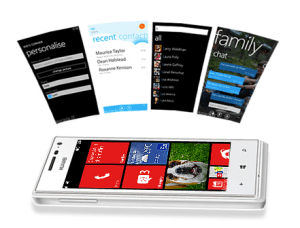
Chinese telecoms giant Huawei launched a Windows smartphone tailored for and exclusively available in Africa. The device, a customized version of the Huawei Ascend W1, was created in partnership with Microsoft as part of its new 4Afrika initiative.
Prices have not yet been announced, but Gustavo Fuchs, director of the Microsoft Windows Phone division in the Middle East & Africa, told the BBC that “our aim is to be the most affordable Windows phone in Africa.” He estimates that there will be “tens of millions of smart devices available across the continent in the next couple of years.”

Fuchs said 4Afrika’s objective is to increase smartphone penetration in the continent, in part by developing apps appealing enough to local consumers to make them consider switching from their feature phones. According to Fuchs, the current penetration rate is “very close to 10%” and less in some regions.
“Affordability is important but without the right local content we believe a lot of users will not see the benefit in the change from a basic feature phone to a smartphone,” says Fuchs.
The phone’s initial rollout will be in Egypt, Nigeria, Kenya, Ivory Coast, Angola, Morocco and South Africa, with phones being marketed according to the retail climate in each country. For example, in South Africa it will be operator-led, while phones will only be sold at retail in the Ivory Coast. Markets like Nigeria and Angola have a mixed environment, Fuchs said.
The 4Afrika initiative also includes plans to develop affordable wireless broadband in Kenya’s Rift Valley and help developers in South Africa and Egypt create Windows apps.
Africa is one of Huawei’s fastest growing markets outside of China. Last November, the company said revenue in southern and eastern Africa may climb as much as 30 percent in the next three years. According to its Web site, Huawei saw revenues of $3.42 billion from Africa in 2011, a 15% increase year-over-year. It has more than 5,800 employees across 18 offices in the continent, as well as a R&D center in South Africa and seven training centers. Huawei’s IDEOS, the first under-$100 smartphone, has been particularly popular in Kenya, gaining a market share of 45 percent.
The Huawei Ascend W1 has a 4-inch touch screen and 5 megapixel camera, and can be on stand-by for up to 420 hours between charges.